

From Volatile Agents to Green Practices: How Anaesthesiologist Can Reduce Carbon Footprint
Dr. Ketaki Ramteke,
Assistant Professor, Department of Anaesthesia,
Superspeciality Hospital Nagpur.


“पृथ्वी संतरणात् संतु नः पुन्या पुन्येन वातः । पुन्येन अध्युष्ट पुण्या पृथ्वी पुन्येन संतु नः ॥“
This shloka emphasizes that our good deeds should protect the Earth and its elements and highlights the interconnectedness of the environment and our responsibility to protect it through our actions.
Introduction
As the world grapples with the urgent and escalating climate change crisis, every profession is called to action. Climate change represents a substantial threat to public health, with implications globally. Surface temperatures have increased by approximately 1°C since the Industrial Revolution, and the Intergovernmental Panel on Climate Change (IPCC) recommends that global greenhouse gas emissions must be substantially reduced by 2029 to limit global warming to 1.5°C above pre-industrial level as the consequences may prove catastrophic. Ever since World Health Organization (WHO) declared climate change as the single best health threat facing humanity, a lot has been and continues to be said about global warming and specifically, regarding the heavy carbon footprint of anaesthesia practice.
Global Issues: Green House Gases (GHG): Carbon Footprint: Global warming Potential (GWP)
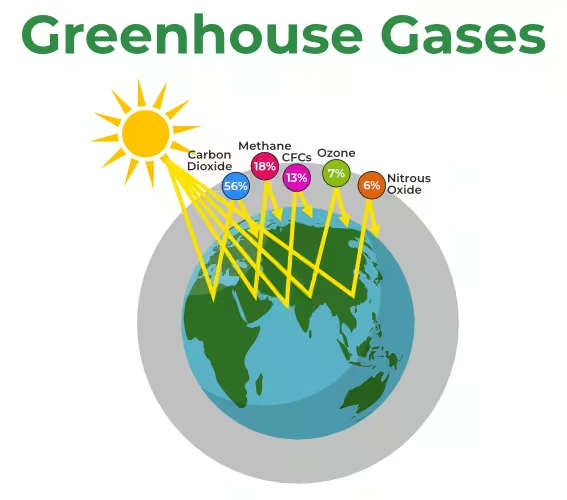
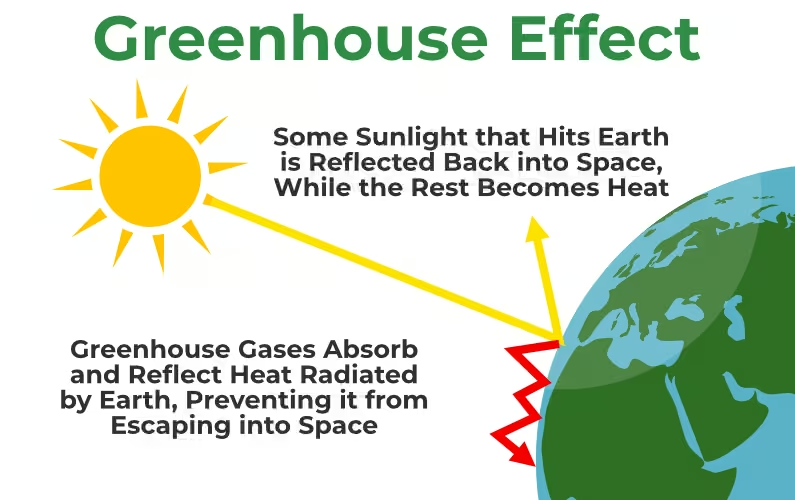
The greenhouse effect occurs when compounds, commonly referred to as greenhouse gases (GHGs), trap heat in the Earth’s atmosphere. Solar energy enters the Earth’s atmosphere and warms the surface; energy from the planet’s surface is then reemitted as infrared energy, which GHGs absorb and reemit back to Earth’s surface. GHGs are important to maintain a habitable global temperature, but the recent increase in GHG emissions, particularly carbon dioxide (CO2), has contributed to the phenomenon of global warming.
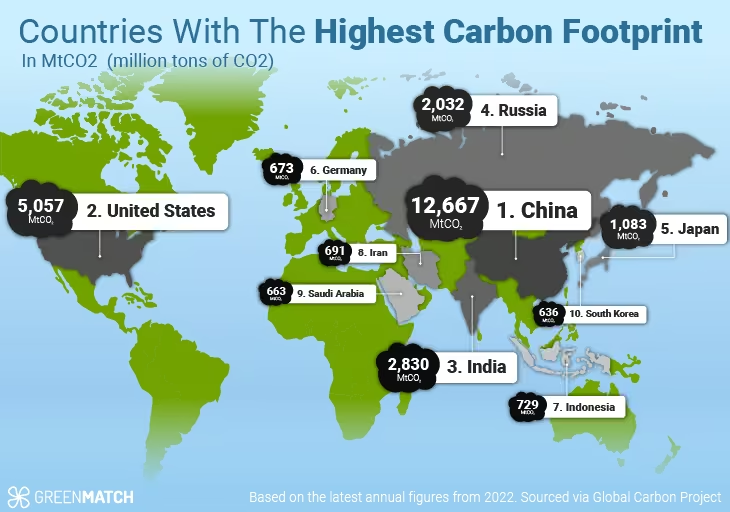
It is essential to acknowledge that every product or services utilized in our daily life carries a carbon footprint which refers to the total amount of greenhouse gases (GHG) emitted by an individual, organization, event or product typically measured in kilograms of carbondioxide equivalent produced over a specified time frame. The bigger your carbon footprint, the more pressure you are putting on the environment. The average person globally has a carbon footprint of 4 tons a year.
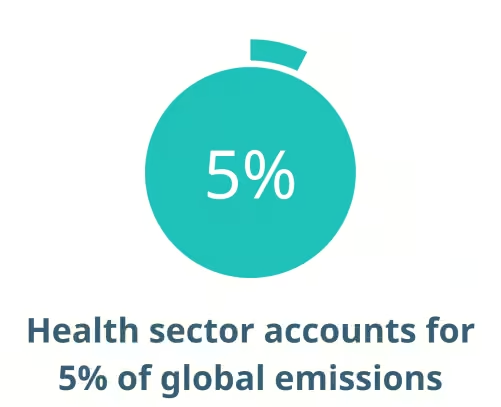
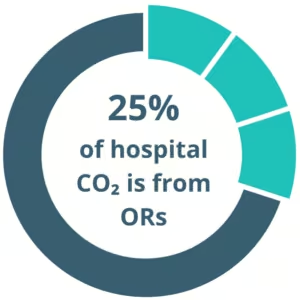
The health care sector plays a substantial role in the climate crisis. Corrente & Colleagues asserted that nearly half of GHG emissions within healthcare are attributed to hospitals. Operating rooms account for one third of total hospital waste and anaesthetic agents such as Volatile anaesthetic agents (VAA) & nitrous oxide contribute to the environmemtal pollution both inside the OR and the outside atmosphere. Impact of these anaesthetic agents depends on the volumes used, characteristics of anaesthetic agents and the total gas flows with higher levels increasing the environmemtal adverse effects. The harmful effect of nitrous oxide is higher as it causes depletion of ozone layer and has a longer atmospheric half life.

Volatile anaesthetic agents are halogenated fluorocarbon compounds, including sevoflurane, desflurane, isoflurane, and methoxyflurane and Nitrous oxide are potential Green House Gases as measured by their Global warming potential. Global warming potential is a measure of the amount of heat a given gas traps in the atmosphere compared to similar mass of carbondioxide as it is often expressed in year time horizon. Because most volatile agents remain in the atmosphere for one to 15 years, the GWP is often expressed over a 20-year time horizon (GWP20). This value represents the amount of heat trapped by the gas over a 20-year period, compared with a similar mass of CO2. For example, the GWP20 values for desflurane, isoflurane, and sevoflurane are 6810, 1800, and 440, respectively.
| MAC Inhaled Agent | Atmospheric Lifetime (years) | 100 yr Global warming Potential (GWP) (per kg compared with 1 kg CO2, where GWP CO2 = 0) | Equivalent auto miles driven MAC-hour of anesthetic use at 1L/min |
|---|---|---|---|
| Isoflurane 1.2% | 3.6 | 539 | 8 |
| Sevoflurane 2.2% | 1.9 | 144 | 4 |
| Desflurane 6.7% | 14 | 2,540 | 190 |
| 60% Nitrous Oxide (0.6 MAC) | 114 | 273 | 49 |
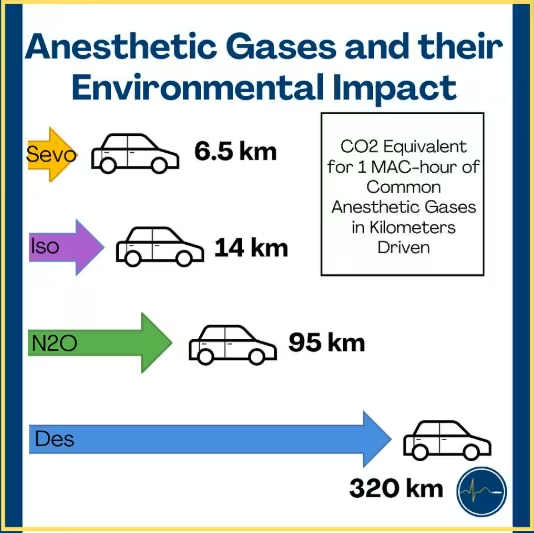
As less than 5% of VAA gets metabolized in the body, major proportion is released into the atmosphere, contributing to greenhouse effect. The inhaled anesthetic gases contributes to climate change ranging from 0.01% to 0.1% of total global greenhouse gas emissions. Furthermore, direct emissions from these anesthetics account for approximately 3% of the healthcare-related climate footprint in high-income countries, as well as over half of the emissions associated with perioperative services.
Adverse Effects on Operating Room Personnel
Prolonged occupational exposure to waste anesthetic gases (WAGs) can result in a range of health effects among healthcare workers:
- Acute symptoms include headache, dizziness, nausea, drowsiness, irritability, and impaired coordination or concentration.
- Chronic exposure has been linked to reproductive disorders, including spontaneous abortions, congenital anomalies, and infertility.
- Hepatic and renal dysfunctions are associated with halogenated agents metabolized via cytochrome P-450 2E1 (especially halothane).
- Neurobehavioral effects, such as cognitive decline and reduced attention, have been observed in chronically exposed personnel.
- Carcinogenic and genotoxic effects, including DNA damage and oxidative stress, have been reported with long-term exposure.
Epidemiologic studies suggest that these effects correlate with exposure duration and inadequate ventilation or scavenging systems within operating rooms.
Adverse effects on the environment
Inhaled anesthetics and nitrous oxide ultimately gain access to the atmosphere from the ORs as medical waste after little or no degradation or treatment. The pollution produced after use of 100 l of inhaled anesthetics (average volume used/year by a busy mid-size US hospital) is reported to be equal to emission from 100–1200 passenger cars/year, depending on the anesthetic used. Sherman et al. studied the climate change impact (GHG emissions) of five anesthetics: sevoflurane, desflurane, isoflurane, nitrous oxide, and propofol. All inhaled anesthetics had significant GHG effects, with desflurane producing 15 times more emission than isoflurane and 20 times more than sevoflurane on per minimum alveolar concentration (MAC)-hour basis. The GHG emissions increase significantly for all anesthetics when administered in nitrous oxide/oxygen mixture. The GHG impact of propofol was comparatively insignificant. Studies on atmospheric concentrations of different WAGs have shown that desflurane concentration is increasing rapidly. Addition of 60% nitrous oxide to fresh gas flow (FGF) increases the global warming impact of desflurane by 40%, isoflurane by 290%, and sevoflurane by 590% at FGF of 2 l/min. On a 100-year time horizon, the global warming potential (GWP) measured as carbon dioxide equivalents (CDE) was 19 times higher for sevoflurane with 60% nitrous oxide than with air/oxygen, nine times higher for isoflurane, and equal for desflurane. This was despite desflurane having the highest GWP with or without nitrous oxide. Regulatory agencies recommend exposure limits as low as 2 ppm for volatile anesthetics and 25 ppm for nitrous oxide to minimize health effects.
Overcoming Challenges
The path to sustainability is not without its challenges:
- Initial costs and resistance to change are significant hurdles.
- Barriers to implementing sustainable practices often include a lack of knowledge about sustainable alternatives, infrastructural challenges, and resistance to changing established norms.
However, we can gradually overcome scepticism by demonstrating the long-term savings and environmental benefits of these practices. There is a growing need for education and training on the environmental impacts of anaesthetic practices and the benefits of sustainable alternatives. This knowledge plays a crucial role in raising awareness and showcasing successful modifications in the system, fostering a culture of sustainability within our community. Anaesthesiologists, other healthcare professionals, and policymakers should actively seek out such education and training opportunities to stay updated with the latest sustainable practices and to contribute to global efforts to reduce the environmental impact on healthcare.
THE CURRENT PROGRESS
GLOBAL:
- European Society of Anaesthesiology and Intensive Care (ESAIC) Sustainiac Committee (2024) and the Glasgow Declaration on Sustainability — Focus on climate neutrality by 2050 through reducing medicine use, energy, and waste in anesthesia care.
- World Federation of Societies of Anaesthesiologists (WFSA) — Sustainability focus with global guidelines promoting reduced use of high-GWP gases and sustainable clinical practices.
- Italian Society of Anesthesia, Analgesia, Resuscitation and Intensive Care (SIAARTI) Green Choosing Wisely Italy initiative (2025) — Recommendations to avoid high-warming gases like desflurane, reduce disposable waste, promote reusable items, and the anesthetist’s role in sustainability advocacy.
- American Society of Regional Anesthesia and Pain Medicine (ASRA) Green Anesthesia Special Interest Group (since 2017) — Promotes education, research, and use of environmentally friendly anesthetic techniques including regional anesthesia. ASA Medical Student Component Green Anesthesia Initiative — Raising awareness in the US on anesthesia’s environmental impacts.
- UK NHS Greener NHS program and ASA’s Greening the Operating Room initiative — Emphasize low-flow anesthesia, waste management, energy efficiency, and reducing greenhouse gases.
- Stanford Medicine Green Anesthesia program — Implements cost-saving and waste-reducing practices such as reusable equipment, and low fresh gas flow.
INDIA
Green Operating Theatre (Green OT) initiatives — To Encourage sustainable anesthesia by focusing on waste reduction and energy efficiency in operating rooms. The Green Operating Theatre (Green OT) initiative in India is a pioneering certification program aimed at promoting environmentally friendly, safe, and sustainable practices in operation theatres across the country. It is the first such certification protocol developed in India under the “Make in India” framework, facilitated by collaboration between Abbott India and Bureau Veritas Certifications. This certification assesses key parameters like air flow, OT setup, anesthesia machines, types of volatile anesthetic agents used, filling systems, and scavenging systems, ensuring modern technology and processes that minimize environmental impact. The certification process includes independent audits focusing on infection prevention, safe anesthesia practices, surgical team safety, quality assurance, and environmental responsibility. Hospitals achieving the Green OT certification receive a “Green Score” based on a 5-point scale indicating their adherence to safety, sustainability, and quality standards. This initiative not only reduces the carbon footprint and waste generated in operating rooms but also helps lower operational costs by 30-40%, while improving patient safety and satisfaction. Several hospitals in India, including Max Super Speciality Hospital Shalimar Bagh, Artemis Hospital Gurgaon, and Fortis Hospital, have obtained Green OT certification. This initiative aligns healthcare practices with global efforts to combat climate change by reducing greenhouse gas emissions, waste, and energy consumption in the healthcare sector.
Marching towards green anaesthesia practice.
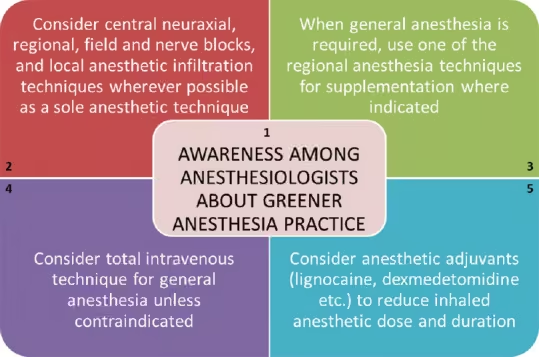
Anesthesiologists can reduce their carbon footprint by adopting several practical, evidence-based strategies focused on reducing direct greenhouse gas emissions, optimizing energy use, and minimizing waste.
- Minimize Use of High Global Warming Potential (GWP) Anesthetic Gases: Avoid or reduce the use of desflurane and nitrous oxide, as these have a significantly higher carbon footprint compared to alternatives such as sevoflurane. Many centers now implement desflurane-free policies or tightly control its use with restricted access. The Official NHS guidance published in March 2024, supports stopping routine use of desflurane in clinical practice from 2026 to reduce environment impact.
- Use Low-Flow or Minimal-Flow Anesthesia Techniques: By reducing fresh gas flows (usually below 1-2 L/min), anesthesiologists can recirculate and reuse anesthetic gases in closed circuit systems, greatly decreasing emissions released into the atmosphere. The use of modern anesthesia workstations with closed circuits and mainstream capnography has permitted us to use LFA with an FGF rate as low as 250 ml (metabolic flow), thereby significantly reducing the consumption of N2O and VAA and effectively cutting down the amount of carbon emission. However, when lower FGF is used, precaution must be taken to prevent hypoxemia. Other interventions include turning off FGF and vaporizer when not required, preventing anesthetic leakage during filling, avoiding flushing of breathing circuit at the end of anesthesia, using well-fitting face mask, avoiding gas leakage from the trachea due to ineffective cuff or inappropriate tracheal tube/laryngeal mask airway size, using mainstream capnograph, and timely maintenance and repair services to avoid harms from machine malfunction.
- Scavenging system: Venting out of WAGs is faster and complete with active scavenging and efficient air conditioning systems. Scavenging reduces exposure to OR personnel, but not environmental pollution. Both can be minimized by reducing use of inhaled anesthetics, especially nitrous oxide and desflurane. Connecting the scavenging system from multiple machines to a single common unit, and collecting WAGs, cold condensing them, and retrieving inhaled anesthetics and purifying for reuse will also be beneficial.
- Employ Regional anaesthesia: Kuvadia and colleagues described that, in addition to positive outcomes among patients, the preferential use of administering regional anesthesia over inhaled anesthetics saved 750 kg of desflurane and 60 kg of nitrous oxide, an equivalent of saving about 2750 gallons of gasoline. Opting for regional anesthesia, such as nerve blocks, whenever possible rather than inhaled anesthetics can help diminish the harmful environmental effects of these volatile gases. Use of neuraxial techniques over Entonox for labour analgesia can significantly cut down the carbon foortprint.
- Use of TIVA & TCI: By avoiding the need of N2O and VAA, TIVA certainly has its benefits, but the amount of plastic waste consumed, like syringes, intravenous tubing, and extensions, should also be taken into consideration. Moreover, it is found that about 45% of all the anesthetic drug waste is accounted to unused propofol. Improper disposal of this may lead to contamination of the water bodies. Hence, incineration at 1000°C for 2 s or disposal of unused propofol solution in bags containing activated carbon is recommended for safe disposal. Life cycle analysis (LCA) follows the “cradle to grave” approach, wherein all the steps starting from manufacturing to disposal are taken into account for estimating the carbon footprint of a product. LCA of various anesthetic agents showed that the contribution from TIVA is negligible in comparison to that from VAA. In a study by Sherman et al the authors analyzed the life cycle GHG emission of inhalational versus intravenous anesthetic agents and found that the magnitude of GHG emission was nearly 4 times higher for desflurane compared to propofol.
- Using TCI with TIVA can significantly reduce the use of both volatile and intravenous anesthetics. Opting for TIVA decreases volatile anesthetic use, and administering TIVA via TCI results in less anesthetic consumption due to the continuous infusion and accurate dosing.
- Maintain and Check Equipment Regularly: Regular machine leak checks, proper filling of vaporizers in well-ventilated areas, and using scavenging systems effectively decrease waste anesthetic gas exposure to staff and the environment.
- Optimize Energy and Resource Use: Keep operating room doors closed to maintain temperature, limit unnecessary lighting and equipment use, utilize reusable supplies instead of disposables when safe, and practice proper waste segregation for recycling.
- Educate and Advocate: Anesthesiologists should promote awareness about environmental impacts within their teams and institutions and advocate for institutional policies that prioritize sustainability.
Future – The way forward
- Use of alternative anaesthetic agents with more favourable environmental profile such as xenon.
- Novel Technologies to destroy inhalational agents such as Volatile Capture technology, & gas photochemistry are still in prototype stage.
- Conducting LCA life cycle assessments to evaluate and compare environmental impacts of anaesthetic agents guiding greener clinical choices.
- Integrating of AI assisted anaesthesia delivery software to optimize anaesthetic dosing and reduce waste.
- Use of p EEG Processed electroencephalogram monitoring
The pEEG monitors available for perioperative use serve to monitorthe depth of sleep/anesthesia.Intraoperative EEG monitoring has demonstratedthe ability to reduce anesthetic exposure. A study found that pEEG-guided anesthesia management reduced propofol delivery by 21 % and the use of volatile anesthetic by 30 % compared to routine care in 921 elderly patients undergoing major noncardiac surgery. Furthermore,EEG monitoring has led to reduced emergence time after GA.
Conclusion:
To conclude, it would be appropriate to cite a befitting Sanskrit shloka: “Mata Bhumi putroham prithivyah” meaning “Earth is my mother; I am her son”, and hence I/we can be anything but inconsiderate to our mother Earth…