Dr. Bhuvaneswari B,
MD, PDCC (Paediatric Anaesthesiology), IDRA, ESRA-DRA
Associate Professor, Department of Anaesthesiology, AIIMS Nagpur
The COVID-19 pandemic will be remembered as one of the defining public health crises of our generation. For anaesthesiologists, it transformed everyday practice almost overnight. Airway management became a high-risk procedure, PPE became part of our professional identity, ICUs expanded beyond their usual boundaries, oxygen became a national concern, and infection control entered every conversation in the operating room. Yet, as the acute crisis slowly receded, another quieter question emerged: what was the environmental cost of our pandemic response?
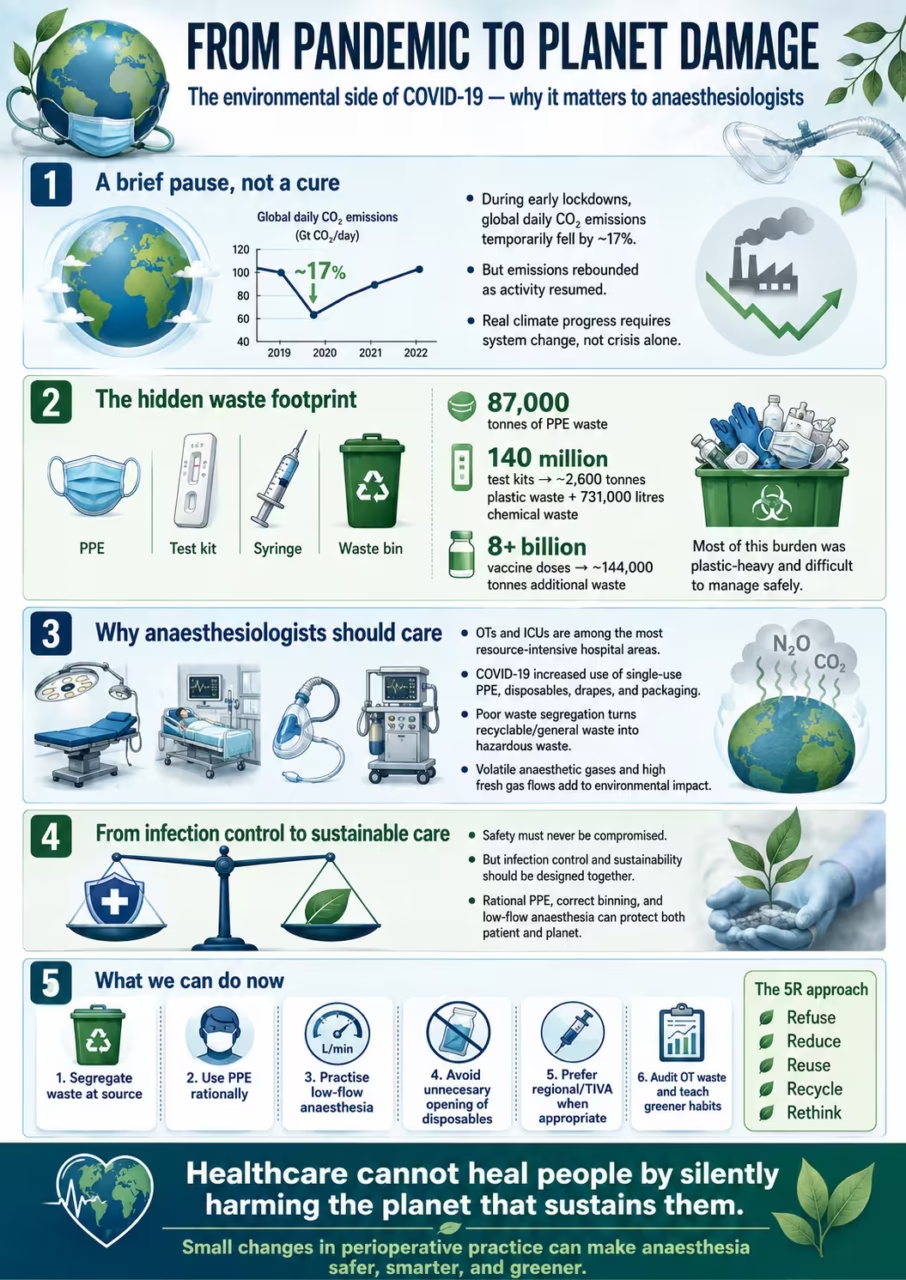
At first glance, COVID-19 appeared to give the planet a brief pause. During lockdowns, roads emptied, flights were grounded, industrial activity slowed, and several cities reported visibly cleaner skies. Le Quéré et al. estimated that global daily CO₂ emissions temporarily fell by approximately 17% during the early lockdown period compared with 2019 levels.¹ However, this was not true environmental recovery; it was a short-lived reduction caused by crisis, immobility, and economic disruption. As human activity resumed, emissions rebounded. The pandemic reminded us that environmental progress cannot depend on suffering or shutdowns. It requires deliberate, sustained, system-level change.
The more lasting environmental legacy of COVID-19 was far less visible: the enormous burden of healthcare waste. The World Health Organization estimated that approximately 87,000 tonnes of PPE procured through a United Nations emergency initiative between March 2020 and November 2021 would eventually become waste. In addition, more than 140 million test kits generated about 2,600 tonnes of mainly plastic waste and 731,000 litres of chemical waste. Over 8 billion vaccine doses administered globally produced nearly 144,000 tonnes of additional waste in the form of syringes, needles, and safety boxes.² These figures did not include PPE procured outside the UN system or disposable masks used by the general public, meaning the true environmental burden was probably much higher.²
India experienced this challenge acutely. COVID-19-related biomedical waste rose sharply during peak waves. A Centre for Science and Environment assessment reported that India generated 45,954 tonnes of COVID-19-related biomedical waste between 1 May 2020 and 10 May 2021, with an average of 126 tonnes per day over and above routine biomedical waste generation.³ In many centres, biomedical waste systems were already working near capacity before the pandemic. COVID-19 exposed the fragility of these systems and showed how quickly waste can become a public health hazard when segregation, transport, treatment, and disposal are overwhelmed.
For anaesthesiologists, this issue is not distant. We work in some of the most resource-intensive areas of the hospital: operating rooms, ICUs, emergency areas, labour rooms, and procedural suites. Our daily work involves oxygen, suction, anaesthesia workstations, breathing circuits, airway devices, intravenous consumables, syringes, drug vials, sterile packaging, disinfectants, monitoring accessories, and anaesthetic gases. Perioperative services are recognised as among the most resource-intensive healthcare services, and healthcare itself contributes substantially to global greenhouse gas emissions.⁵ During COVID-19, infection prevention was rightly prioritised, but it also accelerated a shift towards single-use, plastic-heavy practice. Disposable PPE, disposable circuits, plastic drapes, viral filters, airway disposables, and excessive packaging became routine in many locations.
The problem is not the use of PPE or disposables when they are necessary. PPE saved lives. Infection control protected healthcare workers and patients. The problem is the uncritical continuation of “pandemic habits” even when the risk profile has changed. Fear-based practice can easily become wasteful practice. The challenge before us is to preserve safety while reducing avoidable environmental harm.
Biomedical waste segregation is one of the simplest examples. WHO notes that about 85% of healthcare waste is general non-hazardous waste, while approximately 15% is hazardous material that may be infectious, toxic, chemical, radioactive, or sharps-related.⁴ When segregation fails, general waste and recyclable material enter the hazardous waste stream. This increases treatment costs, incineration load, emissions, and occupational risks for waste handlers. A clean plastic wrapper opened before patient contact is not the same as a blood-soiled airway device. A cardboard drug box is not the same as a used syringe. Correct binning at the point of generation is therefore not a clerical task; it is a clinical and environmental responsibility.
Anaesthesia also has a unique carbon footprint because volatile anaesthetic agents are released into the atmosphere. Life-cycle assessment studies have shown that inhalational anaesthetic agents contribute to greenhouse gas emissions, with desflurane and nitrous oxide having particularly high environmental impact compared with alternatives.⁶ Desflurane has a much higher 100-year global warming potential than sevoflurane and isoflurane, and nitrous oxide persists in the atmosphere for a long time.⁶,⁸ High fresh gas flows further increase anaesthetic consumption and environmental release. This does not mean that every patient must receive total intravenous anaesthesia or regional anaesthesia. It means that anaesthetic choices should be conscious, rational, and patient-centred. Low-flow anaesthesia, avoidance of unnecessary nitrous oxide, and reduced reliance on high-impact agents can make a meaningful difference without compromising care.
The operating room itself is another major contributor. OTs consume large amounts of energy due to ventilation, lighting, air conditioning, sterilisation, electronic equipment, and continuous readiness requirements. Infection prevention measures in operating rooms—including single-use devices, surgical attire, and air treatment systems—also contribute to environmental impact.⁷ Some waste is unavoidable, but much is preventable. We often open airway devices, syringes, infusion sets, drugs, catheters, and disposables “just in case.” Preparedness is essential in anaesthesia, but preparedness need not mean pre-emptive wastage. A difficult airway cart can be ready without opening every device. Emergency drugs can be available without unnecessary dilution and discard. Case-specific preparation, standardised trays, and rational opening of consumables can reduce waste significantly.
Sustainable anaesthesia therefore begins with small, repeated decisions. We can switch off oxygen and air flows when not in use. We can use low fresh gas flows whenever clinically appropriate and supported by monitoring. We can avoid leaving vaporizers, suction, monitors, warmers, and lights on unnecessarily. We can reduce drug wastage by preparing drugs according to expected need rather than habit. We can use regional anaesthesia, neuraxial techniques, or TIVA where clinically appropriate. We can question whether every disposable item is truly required.
Equally important is rational PPE use. High-level protection remains essential during aerosol-generating procedures and high-risk exposure. However, PPE should be matched to actual risk and guided by current infection control policies. Using excessive PPE in low-risk situations does not necessarily improve safety, but it certainly increases waste, cost, discomfort, and fatigue. The goal is not less protection; the goal is appropriate protection.
The pandemic also changed how we learn and meet. Webinars, online CMEs, hybrid conferences, virtual journal clubs, and remote teaching became normal. While hands-on training and in-person academic interaction remain irreplaceable, not every meeting requires travel. Hybrid academic models can reduce travel-related emissions, improve access for smaller centres, and save time and resources. For organisations like ISA NCB, this is an opportunity to combine academic excellence with environmental responsibility.
A practical framework for anaesthesia departments is the 5R approach: Refuse, Reduce, Reuse, Recycle, and Rethink. Refuse what is unnecessary. Reduce excessive consumption. Reuse only where safe, approved, and evidence-based. Recycle clean and correctly segregated material. Rethink systems that create waste by design. This approach does not ask us to compromise patient safety. It asks us to remove waste that never added value to patient care.
The role of senior anaesthesiologists is crucial. Residents learn not only from what we teach, but from what we repeatedly do. If they see high-flow anaesthesia, unnecessary opening of disposables, poor waste segregation, and irrational PPE use as routine, those practices will continue. If they see low-flow anaesthesia, thoughtful preparation, correct binning, and resource-conscious practice as professional norms, sustainability becomes part of their clinical identity.
Institutional support is equally necessary. Individual anaesthesiologists can reduce flows and segregate waste, but larger gains require hospital-level policies: green procurement, biomedical waste audits, reusable options where validated, energy-efficient OT ventilation, rational air exchange policies, environmentally responsible sterilisation, and accountability of waste management vendors. Departments can begin with simple audits: How much OT waste do we generate? How much is incorrectly segregated? How often are unused drugs discarded? What are our fresh gas flow practices? What proportion of cases use nitrous oxide or desflurane? Data can turn good intentions into measurable change.
COVID-19 taught us that healthcare systems can change rapidly when the threat is visible. Climate change and environmental pollution are slower, quieter threats, but their health consequences are profound. Air pollution worsens respiratory and cardiovascular disease. Extreme heat affects vulnerable populations. Plastic pollution enters food chains. Poor waste disposal harms sanitation workers and communities living near landfills and incinerators. Environmental damage is therefore not outside medicine; it is part of public health.
The lesson is clear: healthcare cannot heal people by silently harming the planet that sustains them. As anaesthesiologists, we stand at a powerful intersection of patient safety, technology, pharmacology, critical care, and systems management. Our choices matter. From PPE to plastics, from fresh gas flows to biomedical waste, from OT habits to academic travel, we have multiple opportunities to make anaesthesia safer, smarter, and greener.
The pandemic demanded urgency. The planet now demands wisdom. Let us carry forward the lessons of COVID-19 not as fear, but as responsibility. Small changes in perioperative practice, repeated consistently across departments, can create meaningful environmental impact. For ISA NCB and for every anaesthesia department, the time to begin is now.
References
- Le Quéré C, Jackson RB, Jones MW, Smith AJP, Abernethy S, Andrew RM, et al. Temporary reduction in daily global CO₂ emissions during the COVID-19 forced confinement. Nat Clim Chang. 2020;10:647–653.
- World Health Organization. Global analysis of health care waste in the context of COVID-19: status, impacts and recommendations. Geneva: WHO; 2022.
- Centre for Science and Environment. Managing COVID-19 biomedical waste in India. New Delhi: CSE; 2021.
- World Health Organization. Health-care waste: fact sheet. Geneva: WHO; 2024.
- MacNeill AJ, Rizan C, Sherman JD. Improving sustainability and mitigating the environmental impact of anaesthesia and surgery along the perioperative journey: a narrative review. Br J Anaesth. 2024;133(6):1397–1409.
- Sherman J, Le C, Lamers V, Eckelman M. Life cycle greenhouse gas emissions of anesthetic drugs. Anesth Analg. 2012;114(5):1086–1090.
- Bolten A, Kringos DS, Spijkerman IJB, Sperna Weiland NH. The carbon footprint of the operating room related to infection prevention measures: a scoping review. J Hosp Infect. 2022;128:64–73.
- Waberski AT, Zoghbi V. Environmental impact of desflurane. OpenAnesthesia; 2024.