Dr. Shweta Bulle
Consultant Anaesthesiologist,
Indira IVF, Nagpur

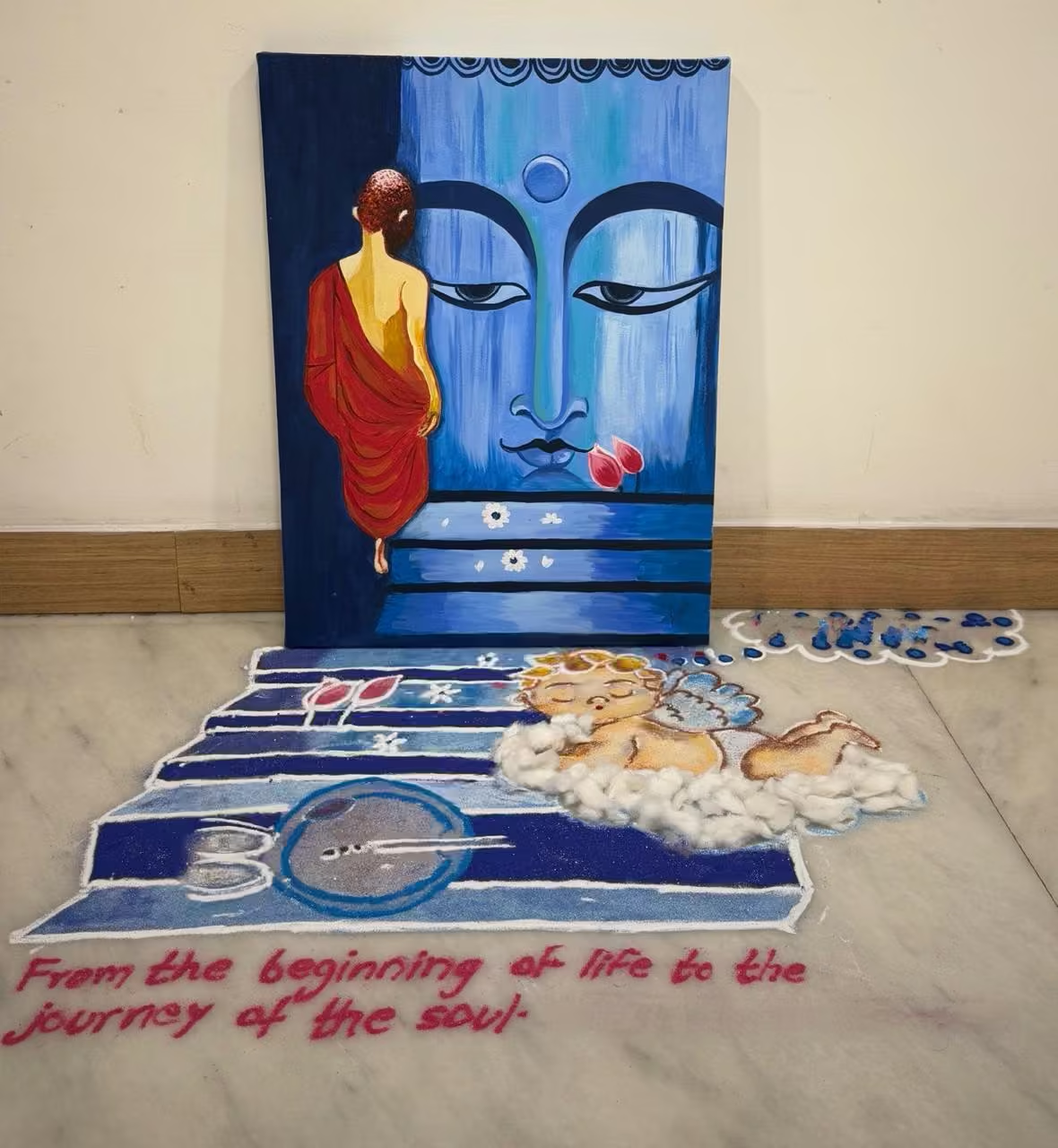
Mission of ISA-NCB 2025-26 stands clear and compassionate- Safe Anesthesia: the right of every mother and child. It’s the journey from birth to enlightment. Just as the monk walks towards wisdom, anesthesiologists walk each step with safety, compassion and mindfullness; safeguarding every mother and every child.
“Between a mother’s heartbeat and a baby’s first cry,
lies the quiet vigilance of anesthesia; unseen, yet life’s gentle ally.”
Safe anesthesia is not a privilege; it is a fundamental right of every mother and child. From the first breath drawn in the delivery room to the complex journeys of assisted reproduction, anesthesia forms the invisible shield that ensures safety, comfort, and dignity in the most delicate moments of human life.
The journey toward motherhood often begins with hope and sometimes, with science. In-vitro fertilization (IVF) has transformed this hope into reality for countless women. Anesthesiologists play a silent yet crucial role in this process, providing safe sedation during oocyte retrieval and managing peri-procedural pain with utmost precision. The use of short-acting, minimally depressant agents ensures the safety of both mother and potential embryos. In IVF suites, anesthesiologists balance compassion with technology, ensuring that every
woman’s dream of motherhood unfolds without fear or discomfort.
Once conception succeeds, the focus shifts to obstetric anesthesia. It is a field where safety and vigilance must be absolute. The physiological changes of pregnancy pose unique challenges: altered drug pharmacokinetics, increased aspiration risk, and the ever-present responsibility of caring for two lives. The choice between regional and general anesthesia is guided by safety first, always weighing maternal comfort with fetal well-being. Epidural analgesia not only reduces labor pain but also enhances the birth experience. It empowers mothers to deliver with confidence rather than fear.
Yet, the concept of safety today extends beyond the operating room. As climate change threatens global health, anesthesiologists are also embracing
“green anesthesia.” Traditional volatile agents like desflurane and nitrous oxide contribute significantly to greenhouse emissions. The shift toward low-flow anesthesia, total intravenous anesthesia, and recyclable systems represents a new dimension of ethical care—protecting not only patients but also the planet their children will inherit. A safe mother and child deserve a safe environment too.
Ensuring safety also means addressing disparities. In many low-resource settings, lack of anesthesiologists and monitoring equipment contributes to preventable maternal and neonatal deaths. The World Health Organization
emphasizes that access to safe anesthesia is a human right, not a luxury. Training programs, tele-anesthesia, and simulation-based education are bridging these gaps, empowering healthcare providers across geographies to deliver competent and compassionate care.
The COVID-19 pandemic further highlighted the anesthesiologist’s role as a frontline guardian. From managing infected mothers in labor to performing life- saving intubations with strict infection control, anesthesiologists redefined resilience. Their adaptability and innovation ensured continuity of safe obstetric and neonatal care, even in crisis.
“Because every delivery deserves dignity, and every life deserves safety.”
Ultimately, safe anesthesia is a promise—a promise of comfort to the
mother, protection to the child, and trust to the family. It reflects a society’s commitment to equity, science, and humanity. When anesthesia is delivered safely, ethically, and sustainably, it upholds not only medical standards but also moral responsibility.
As we move forward, let every mother breathe freely without fear, and every newborn cry in a world where safety begins even before the first breath.
Safe anesthesia is not merely a medical service; it is the birthright of every mother and child.