

War, Warming, and Well-Being: A World at Risk
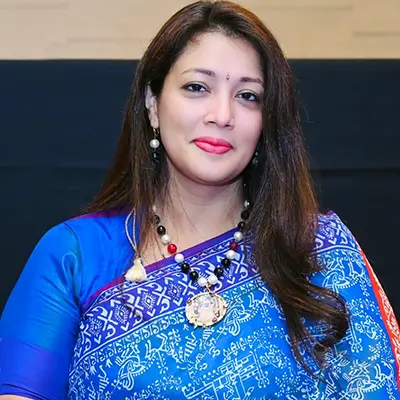
Dr. Sheetal Deshpande Samel
MD Anaesthesia
Consultant Anaesthesiologist
Burning Borders, Warming Planet
Geopolitics, Climate & the Health of a Fractured World
When a nation lights the match of conflict, the smoke does not respect its borders it rises into a sky already thick with the fever of a warming world.
The phrase “burning borders” carries a double weight in the third decade of the twenty-first century. It speaks, on one hand, of literal geopolitical fires the artillery barrages over contested territories, the drone strikes illuminating midnight skies, the scorched-earth retreats leaving landscapes unrecognisable. On the other, it describes the slow, catastrophic combustion of our planet’s climate equilibrium. That these two crises are not parallel tragedies but deeply entangled ones is among the most urgent medical and ecological truths of our time.
THE GEOPOLITICS OF FLAME
The ongoing conflict in Eastern Europe, the persistent tensions across the South China Sea, the fractured alliances of the Middle East, and the simmering rivalries of the Indo-Pacific have together created a world where military expenditure now rivals and in some nations surpasses investment in climate adaptation. Globally, defence budgets crossed five trillion US dollars in 2024, while commitments to the UN Green Climate Fund remain chronically underfunded. Wars consume oil, steel, and human lives with equal indifference; they also consume the decades we do not have left to decarbonise.
The invasion of Ukraine alone disrupted the global grain supply, pushing nations across Africa and South Asia toward food insecurity that laid bare the anatomical connection between geopolitical violence and environmental stress. As Europe scrambled for energy security, fossil fuel extraction was accelerated, new LNG terminals hastily approved, and carbon commitments quietly shelved. Every artillery shell fired releases greenhouse gases. Every tank column that rolls across a field compacts soil that once sequestered carbon. Conflict is, in its chemical essence, a carbon event.
“The planet does not distinguish between peacetime emissions and wartime ones. The atmosphere absorbs every plume with the same indifference.”
A PLANET UNDER CLINICAL STRESS
As physicians examine a patient, the Earth presents a constellation of alarming vitals. Global mean temperature has now breached 1.5°C above pre-industrial levels for consecutive years a threshold the Paris Agreement treated as a ceiling, not a floor. The Arctic is warming four times faster than the global average. Coral bleaching events, once centennial, now occur in cycles shorter than a human childhood. The Amazon, historically a carbon sink of planetary significance, has begun emitting more carbon dioxide than it absorbs in its degraded eastern stretches. The prognosis, absent radical intervention, is a world 2.5 to 3°C warmer by 2100 a world medically incompatible with human civilisation as we know it.
✚ Clinical Note: The WHO classifies climate change as the single greatest health threat facing humanity. By 2030, it is projected to cause 250,000 additional deaths annually from malaria, diarrhoea, heat stress, and malnutrition diseases intimately linked to environmental destabilisation and exacerbated by conflict-driven displacement.
Geopolitical instability accelerates every one of these trajectories. Conflict disrupts reforestation programmes, disables renewable energy infrastructure, contaminates water sources, and drives populations into displacement where they become both victims and, through the sheer metabolic demands of survival, contributors to further environmental degradation. The refugee does not choose between cooking fire and carbon footprint. Survival has no green alternative when institutions have failed.
THE MEDICAL CONSEQUENCES
For those in medicine, the warming planet is no abstraction. Heat-related illnesses are now the fastest-growing category of climate-attributable mortality. Vector-borne diseases are migrating to latitudes and altitudes once considered climatically hostile to their carriers. Dengue has reached Europe. Malaria is being documented in the highlands of East Africa where it was unknown a generation ago. Wildfire smoke a product of hotter, drier conditions amplified by political failures to manage forests has created a global epidemic of respiratory disease and cardiovascular events. The emergency room of the future will be a climate ward.
Geopolitical conflict layers acute trauma atop this chronic environmental illness. Hospitals in conflict zones operate without stable electricity a requirement increasingly met, when met at all, by diesel generators whose emissions contribute to the very crisis overwhelming them. The wounded soldier and the displaced farmer drink from the same dwindling aquifer. The medic treating burns from incendiary weapons works under a sky carrying the particulate legacy of a thousand unchecked wildfires.
THE HORIZON AHEAD
The future, absent transformation, is a study in compounding vulnerabilities. Climate scientists project that by 2050, between 1.2 and 1.5 billion people will live in regions of near-uninhabitable heat stress. Resource scarcity water, arable land, fisheries will become the primary driver of geopolitical conflict, even as the conflicts themselves accelerate the depletion of those resources. It is a feedback loop with the precision of a clinical cascade: organ following organ into failure.
Yet medicine also teaches us that cascades can be interrupted. The body has extraordinary capacity for recovery when the insult is removed, the environment is corrected, and time is not squandered. What the planet requires is the same disciplined urgency a good physician brings to a deteriorating patient: honest diagnosis, immediate stabilisation, and a long-term plan built on evidence rather than political convenience. The transition to renewable energy is not ideology it is triage. Climate diplomacy is not idealism it is prophylaxis.
“We do not inherit the Earth from our ancestors. We borrow it from our patients.”
On this World Environment Day, as practitioners of healing gather to reflect, let us carry the full weight of that borrowed trust. The borders burning across our maps are symptoms. The warming planet is the diagnosis. And the prescription cooperation over conflict, diplomacy over devastation, sustainability over short-term sovereignty has never been more clearly written. The question is whether humanity will read it in time.
“First, Do No Harm To the Planet That Sustains Us All”